TempSafe® BioShield™
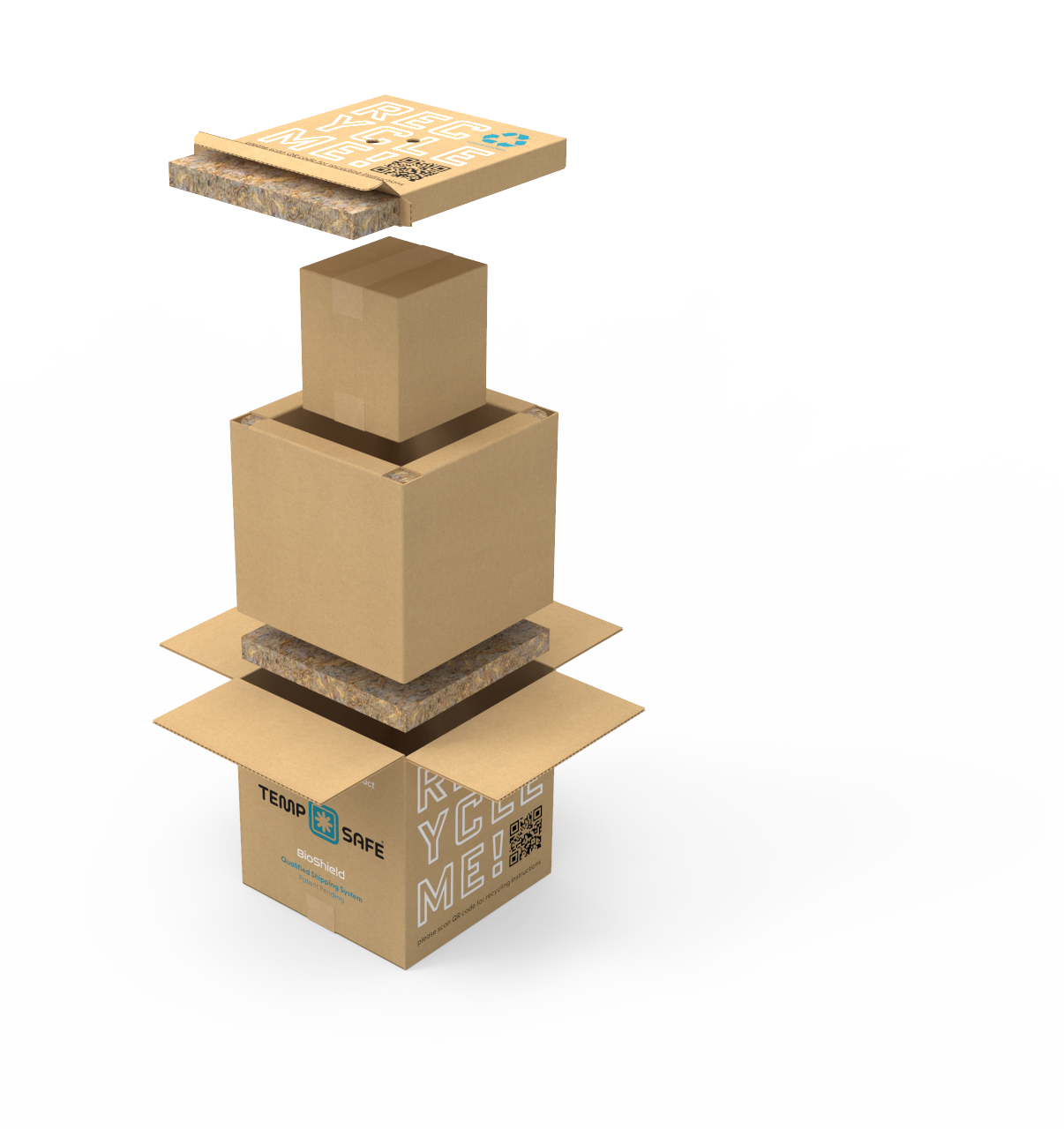
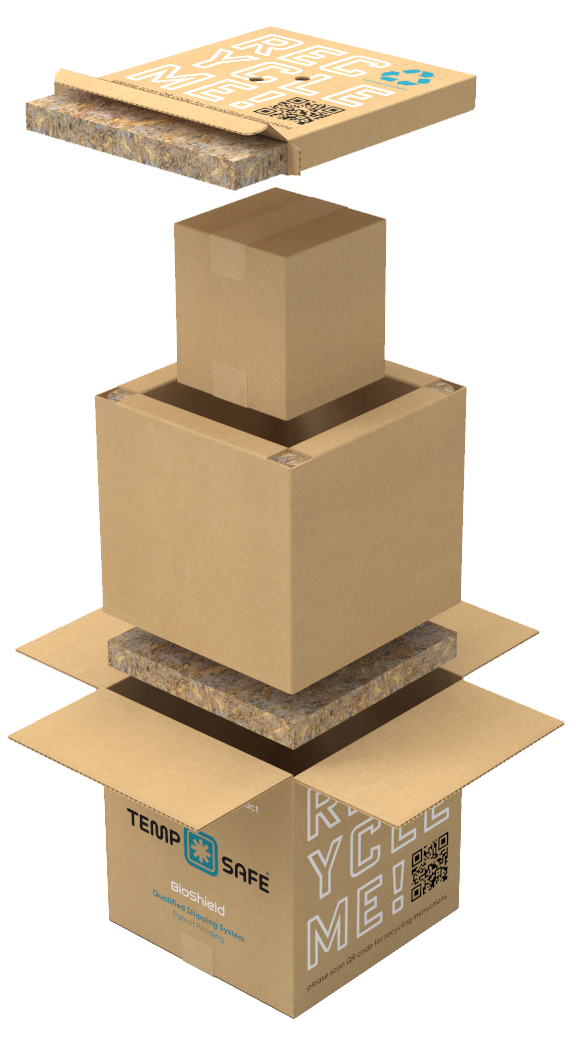
TempSafe® BioShield™ is a patent-pending, cellulose thermal shipper engineered for Life Science applications that demand temperature assurance in transit.
- Rigorously tested to perform against ISTA 7E standards for up to 72 hours, and ISTA 7D up to 72 hours with PCM integration
- Qualified for frozen, refrigerated, and controlled room temperature (CRT) applications
- Maintains payload integrity across both summer and winter profiles
*may not be recyclable in your area, please check local guidelines
Applications
- Life Science and Medical Shipments
- Biopharmaceuticals and Diagnostics
- Clinical Trials and Specialty Pharma
Frequently Asked Questions (FAQs)
A. Cold Chain refers to the process or products involved in shipping temperature-sensitive items from origin to destination while maintaining a stable environment within the cooler. This prevents spoilage of food and maintains the stability and efficacy of life-altering medications.
A. The four conventional temperature ranges are:
Frozen/Dry Ice (<-20°C) Refrigerated (2-8°C) Ambient/Room Temp (15-25°C) Cryogenic/Liquid Nitrogen Frozen (>-80°C)
A. Temperature excursion occurs when a product that must maintain a specific temperature range falls below or exceeds that range. For example, if a product required to stay between 2°C – 8°C falls below 2°C or rises above 8°C, it results in a temperature excursion.
A. Many factors are used to determine when dry ice should be used over frozen gel packs. Dry ice is one of the more costly options but offers the best duration. It sublimates up to 10 pounds per day depending on the ambient temperature and turns into carbon dioxide. Be cautious of trapped gases when opening the cooler.
A. To maximize the life and duration of refrigerants, the recommended conditioning temperature is -20°C. Some companies freeze their refrigerants at -5 to -10°C, which is less effective. Depending on the validated solution, refrigerants may need to be benched at room temperature before being packed out to avoid flash freezing.

A. Validated shippers are designed and tested to meet the temperature and duration requirements of a custom payload. They are tested against strict seasonal temperature profiles for repeatable results in environmental chambers, and are often used for life science, healthcare, and pharma applications requiring consistent results to protect product efficacy.
A. Product stability refers to the ability of some products to withstand temperature excursions for a specific duration. The stability is determined by the product manufacturer. For example, a vaccine that must stay between 2-8°C may remain stable up to 15°C for less than 8 hours. If the temperature falls below 2°C or rises above 8°C, the product is no longer safe to use.
Contact Us
Our experts create custom solutions to keep your temperature-controlled products safe and efficient during delivery. Contact us today to get started!