

Specialty pharmaceuticals move through a supply chain that is more complex, more temperature sensitive, and less forgiving than standard healthcare logistics. These products often have narrow allowable ranges, short stability windows, and high financial value. That combination makes cold chain packaging one of the most critical controls in ensuring product integrity.
Finding the best cold chain solutions for specialty pharma means choosing packaging and processes that can withstand real world conditions, not ideal ones. Temperature swings, carrier delays, seasonal extremes, and inconsistent pack outs remain the biggest threats. This guide breaks down the technologies, packaging types, failure points, and innovative drivers that shape modern cold chain shipping for pharmaceuticals, biotech and life science organizations.
Why Cold Chain Shipping Is Getting Tougher
Specialty therapies are advancing faster than packaging standards. Many products have highly sensitive stability profiles, including:
- Cell and gene therapy materials requiring ultralow storage
- Biologics that degrade with minor heat exposure
- CRT products that fail when exposed to cold weather
- High value prescription therapies shipped direct to patients
The market is also shifting:
- Longer shipping distances
- More direct-to-patient delivery
- Increasing volume in hot and cold peak seasons
- Growth of biologics and temperature sensitive products
- Higher regulatory scrutiny and serialized tracking
Cold chain management is no longer just insulation and coolants. It demands data, lane-specific engineering, and packaging designed for real supply chain behavior.
Types of Cold Chain Packaging for Specialty Pharma
Choosing the right cold chain system is one of the biggest levers for protecting temperature-sensitive products. Specialty pharma teams tend to rely on four major categories.
Passive Single Use Packaging
Passive single use packaging remains the backbone of specialty pharmacy distribution because it is cost efficient, easy to assemble, and validated across CRT, refrigerated, and frozen ranges.
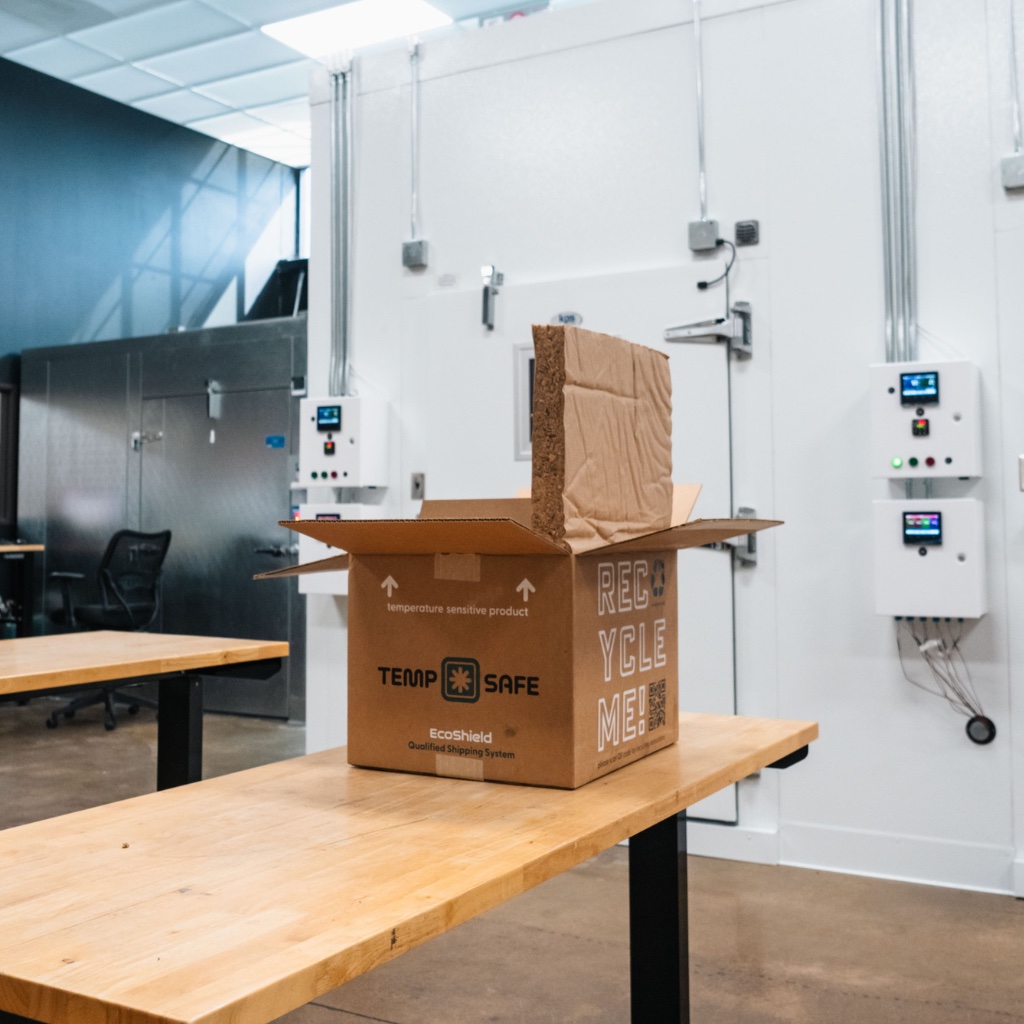
Most designs use EPS or fiberboard insulation paired with gel packs or PCM coolants, adjusted seasonally to match expected temperatures. This type of packaging is widely available, works well in small parcel networks, and is ideal for short to medium duration shipments and high-volume prescription programs.
Reusable Passive Containers
Reusable passive solutions are growing rapidly as pharmacies aim to reduce waste and boost performance. It offers improved thermal efficiency, stronger protection against temperature spikes, lower long-term waste, and often better dimensional weight utilization. It’s particularly well suited for centralized pharmacies that ship consistent volumes on a weekly basis.
Ultra-low Temperature Packaging
Ultra-low temperature packaging is necessary for therapies that must stay below –70°C, and in some cases down to –150°C. Common formats include VIP-lined containers, dry ice shippers, specialized PCM blends, and liquid nitrogen dry vapor tanks. This packaging is ideal for viral vectors, mRNA materials, and advanced cell and gene therapy programs.
Explore Veritiv’s cold chain solutions >
Key Technologies That Strengthen the Cold Chain
Modern cold chain packaging solutions rely on more than insulation. The best systems integrate multiple layers of control.
Temperature Monitoring
Real time data is quickly becoming expected rather than optional. It gives teams visibility into:
- Excursion alerts
- Dwell times
- Route bottlenecks
- Root-cause investigations
Thermal Modeling and Lane Simulation
Prevents failures before they occur by using:
- Carrier data
- Weather patterns
- Lane exposure profiles
- Historical shipment performance
PCM and Coolant Innovation
Better coolants reduce the risk of:
- Overcooling CRT products
- High heat infiltration
- Rapid temperature swings
Sustainable Materials
A rising focus, especially for large pharmacy programs.
Examples:
- Recyclable insulation
- Reusable rigid containers
- Right-sized carton engineering
Common Failure Points in Cold Chain Shipping
Cold chain packaging does not fail randomly. It fails for predictable, repeatable reasons that can be engineered out. Here are the most frequent issues.
Seasonal Temperature Extremes
A validated summer or winter profile only works if it is actually followed.
Common problems:
- CRT shipments freezing in winter
- Refrigerated shipments overheating in summer
- Seasonal pack outs not updated on time
- Weather anomalies that exceed validated limits
Incorrect Coolant Conditioning
This is one of the most common root causes of excursions.
Typical errors:
- Coolants packed too warm
- Frozen coolants used in CRT shipments
- PCM prepared outside its required charge time
- Inconsistent staging between locations
Pack Out Variability
Even excellent packaging fails when assembled incorrectly.
Issues include:
- Missing coolants
- Incorrect placement
- Poor carton sealing
- Damaged insulation boards
Carrier and Network Variability
Once a package enters the network, exposure becomes unpredictable.
Risk factors:
- Long dwell times in sorting facilities
- Unplanned weather events
- Delivery delays
- Poor route predictability
Lack of Temperature Visibility
Without monitoring, teams lose the ability to diagnose or improve.
This leads to:
- Avoidable product loss
- Repeat failures on the same lanes
- Incomplete chain-of-custody documentation
How to Choose the Right Cold Chain Packaging Solution
For specialty pharma, the best packaging strategy is based on data, not preference. Key considerations include:
- Product stability profile
- Transit duration
- Seasonal weather conditions
- Parcel vs freight networks
- Lane validation data
- Cost vs risk tolerance
- Coolant conditioning practices
- Technician training and turnover
Helpful rule of thumb: The more sensitive the product, the more predictable the packaging must be.
Veritiv’s Role as an Innovator in Cold Chain Packaging
Veritiv became a leader in cold chain by focusing on thermal engineering, materials research, and practical design. We understand how real supply chain conditions & regulatory demands interact with packaging, and developed solutions informed by that data.
What makes Veritiv stand out:
- Engineering teams use thermal modeling and lane simulation to refine insulation, coolant layouts, and seasonal profiles
- Designs are updated frequently based on changes in carrier behavior, weather trends, and new therapy requirements
- Material research focuses on improving hold times without increasing operational burden
- Pack out simplicity is prioritized to reduce technician variability and streamline workflow
In other words, innovation is not treated as marketing language. It is the result of consistent testing, iterative design, and attention to how pharmacies actually operate.
TempSafe®RxShield™: A Practical Example of Veritiv’s Innovation
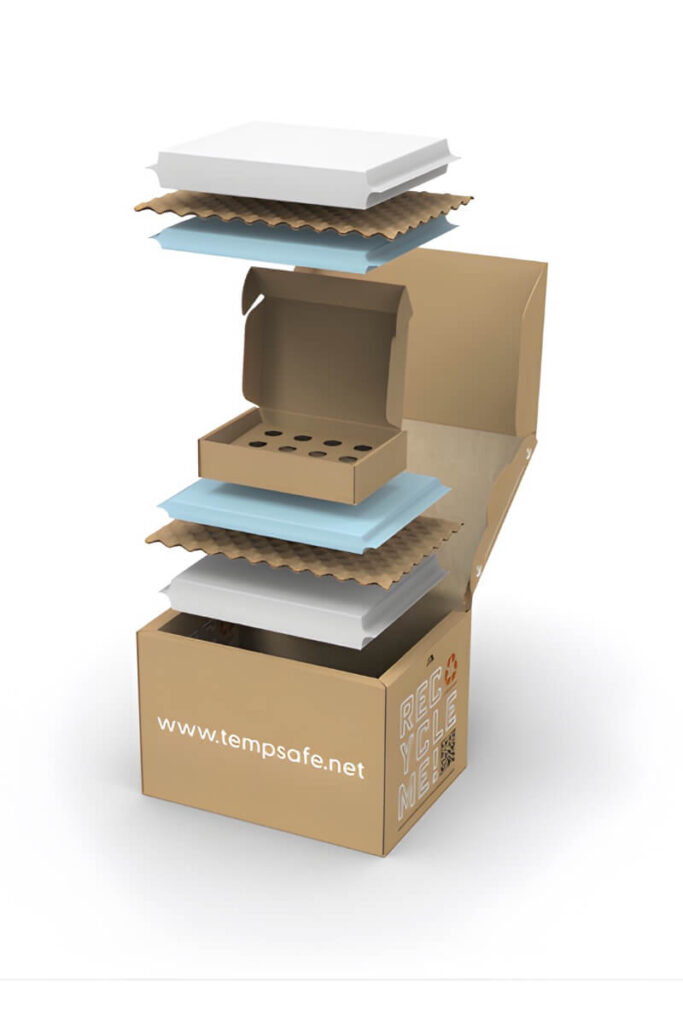
TempSafe® RxShield™ is Veritiv’s CRT solution designed for high volume specialty pharmacy programs. It was engineered to solve a problem that often gets overlooked: CRT shipments are just as vulnerable as refrigerated, especially in winter.
Key attributes of RxShield™:
- Curbside recyclable cellulose in a cost-effective package
- Strong CRT protection in both heat and cold
- A simple pack out that reduces training time and technician error
- Coolant loads tuned to maintain stability without overcooling
- Small footprint designed with dimensional weight in mind
Why it matters: CRT excursions are common because many systems protect against heat but not cold. RxShield™ was engineered to close that gap without complicating operations.
Find out if RxShield™ is the correct solution to your business >
Bringing It All Together
The best cold chain solutions for specialty pharma protect temperature sensitive products in real conditions, not controlled ones. Achieving that level of reliability requires the right combination of:
- Passive, reusable, or active systems
- Seasonal pack outs
- Lane specific data
- Temperature monitoring
- Material and coolant innovation
- Strong operational discipline
Specialty pharmacies, biotech organizations, and life science manufacturers need packaging partners that understand the evolving demands of modern cold chain shipping. The organizations that succeed are the ones that combine engineering, data, and practicality to create solutions that perform through every season and every route.