
Key Takeaways
Choosing the appropriate cold chain packaging is critical for safeguarding product quality, ensuring regulatory compliance, and controlling costs. Effective temperature-controlled packaging solutions are engineered to consistently protect product integrity across various shipping routes and conditions. This outlines a practical, step-by-step approach for buyers to select and standardize cold chain packaging that performs reliably in real-world situations.
Why Cold Chain Packaging Selection Matters
Most temperature excursions do not occur because of one extreme event. Instead, they are often the result of packaging choices based on assumptions that fail to reflect real shipping conditions. Cold chain logistics contain multiple underestimated risk points, such as missed sort cycles, exposure on the ramp, cross-dock dwell times, weekend holds, and failed first delivery attempts.
Common mistakes in packaging selection include designing packaging according to carrier service levels rather than true exposure times, choosing refrigerant types without considering freeze risk, using validated shippers outside their qualified payload size or configuration, inconsistent pack out practices across sites, and failure to qualify packaging for both summer and winter profiles. A high-performing cold chain solution must be designed for real shipping lanes, not just ideal scenarios.
Organizations that standardize their cold chain packaging solutions based on real-world exposure, not assumptions, dramatically reduce excursion risk and total cost-to-serve.
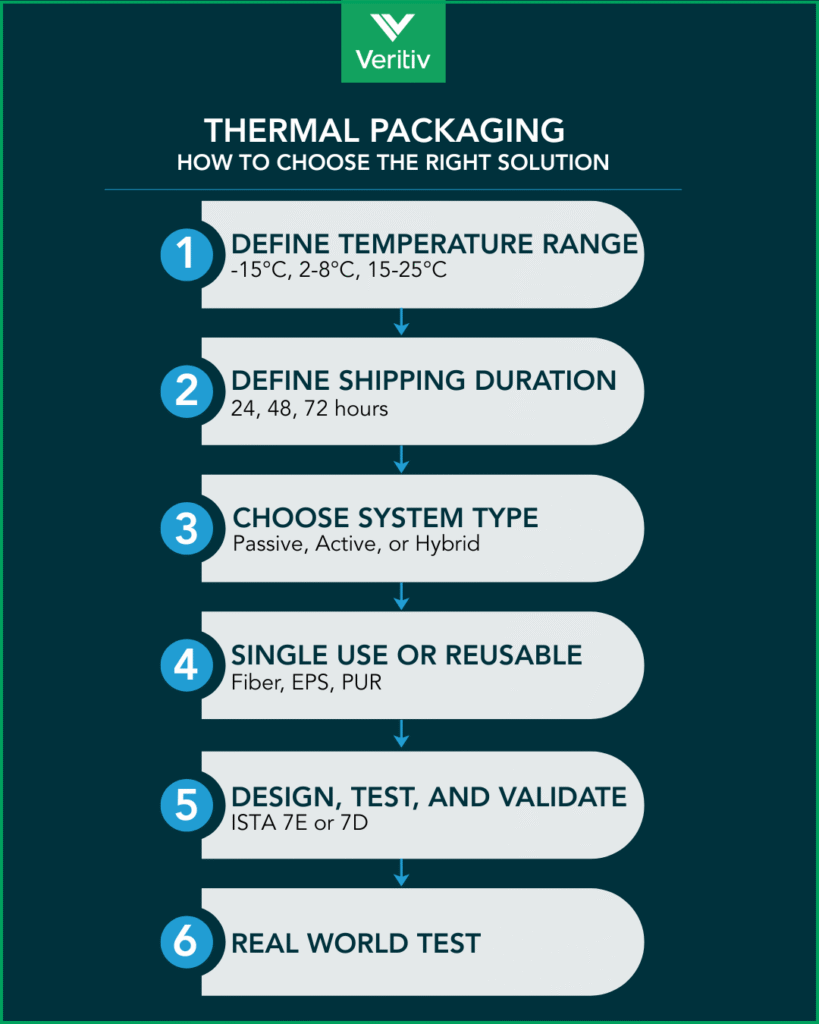
Step 1: Define Temperature Requirements and Product Risk
Begin with the product label and stability data, translating these into clear design inputs for your shipping solution.
Common Cold Chain Temperature Ranges:
Controlled Room Temperature (CRT): typically 20°C to 25°C (or 15°C to 25°C depending on label)
Refrigerated (Cold): typically 2°C to 8°C
Frozen: typically -25°C to -10°C or colder as required
Below -40°C: ultra-cold conditions
Temperature range alone is not sufficient. Buyers must also define:
Excursion sensitivity and allowable deviations
Freeze sensitivity (many 2 to 8°C products cannot freeze)
Thermal mass and packaging sensitivity of the payload
Maximum acceptable time outside controlled storage during handling
A shipment can remain “cold” and still be unacceptable if it drops below the product’s minimum temperature. Freeze risk must be explicitly defined at this stage.
Step 2: Define the True Shipping Exposure Window
Packaging should be designed for real-world exposure, not carrier marketing promises.
Define the full exposure window by evaluating:
Planned transit time
Realistic delay assumptions such as missed sorts or weather
Weekend holds
Dock time at origin and destination
Time to receiving and put-away
Failed first delivery attempts
A two-day service lane can easily become a 60-hour exposure in summer conditions. The shipper must be engineered for the true exposure window, not the theoretical one.
Step 3: Choose the System Type
Temperature-controlled shipping systems generally fall into three categories:
- Passive systems: Use insulation and refrigerants such as gel packs, phase change materials (PCMs), dry ice, EPS, or vacuum insulated panels (VIP).
Dominant in parcel cold chain due to scalability and cost-effectiveness. - Active systems: Use powered heating and cooling for precise control.
Best for long durations, high variability, and high-value payloads. - Hybrid systems: Combine passive technologies with monitoring, procedural controls, and escalation pathways to reduce excursion risk.
Buyer Takeaway
If lanes are consistent and operationally standardized, passive systems often offer the lowest cost-to-serve.
As variability, delay risk, or payload value increases, the cost of excursions may exceed the premium for greater control. Active and hybrid systems function as risk mitigation tools rather than automatic upgrades.
Main Cold Chain Packaging System Types
Cold chain mailers: Lightweight parcel protection for direct-to-patient, diagnostics, and short-duration CRT or refrigerated lanes
Passive parcel shippers: Rigid insulated systems for 24 to 96 hour pharmaceutical distribution
Active parcel systems: Powered precision control for high-value and high-risk routes
Pallet-level passive systems: Covers, shrouds, and bulk containers for consolidated freight and ramp exposure
Pallet-level active systems: Powered containers for international biopharma and long-duration shipments
Step 4: Single-Use or Reusable, Including Materials and Refrigerants
Cost-to-serve is not just the unit price. The insulation platform, refrigerant strategy, and operational model are intertwined.
Single-Use Systems: Simplify operations and eliminate reverse logistics. Has recurring packaging spend.
Insulation Options
Expanded polystyrene (EPS): Low cost and widely available. High volume, short- to mid-duration. Bulky and sustainability concerns.
Polyurethane (PU) foam: Better performance than EPS. Suitable for longer durations and higher-risk lanes.
Paper-based insulation: Increasing adoption in food and some life sciences. Easier disposal and sustainability advantages for short to mid-duration shipments.
Refrigerant Options
Gel packs: Simple and low cost. Suitable for short-duration and moderate-risk shipments. Freeze risk if conditioned improperly.
Phase change materials (PCMs): Engineered to specific setpoints for stable control and freeze protection.
+5°C for refrigerated
+22°C for CRT
-21°C for frozen
Dry ice: Used for ultra-cold and long-duration lanes. Requires CO2 venting, labeling, and mass calculations with delay assumptions.
Single-use systems prioritize simplicity, scalability, and operational ease.
Reusable Systems: Lower cost per shipment at high volumes. Requires reverse logistics, inspection, cleaning, and inventory management.
Insulation Platforms
Vacuum insulated panels (VIP): High thermal resistance in compact form. Ideal for 48 to 96 hour lanes and high-value payloads. More expensive and sensitive to handling damage.
High-performance PU systems: Durable molded platforms for extended duration programs.
Refrigerant Strategies
High-performance PCMs
Engineered dry ice solutions
Eutectic plates
Seasonal pack-out configurations
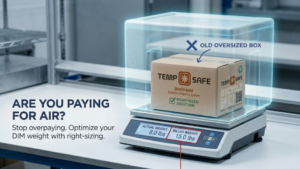
Reusable systems reduce dimensional weight and refrigerant mass through higher-performing insulation, but demand disciplined handling and closed-loop logistics.
https://www.coldchain.veritiv.comBuyer Takeaway
Higher-performance insulation reduces refrigerant needs and box size but increases sensitivity to handling and pack-out discipline.
The right model depends on network design, shipment frequency, payload value, and operational maturity.
Step 5: Design, Test, and Validate
Performance must be repeatable.
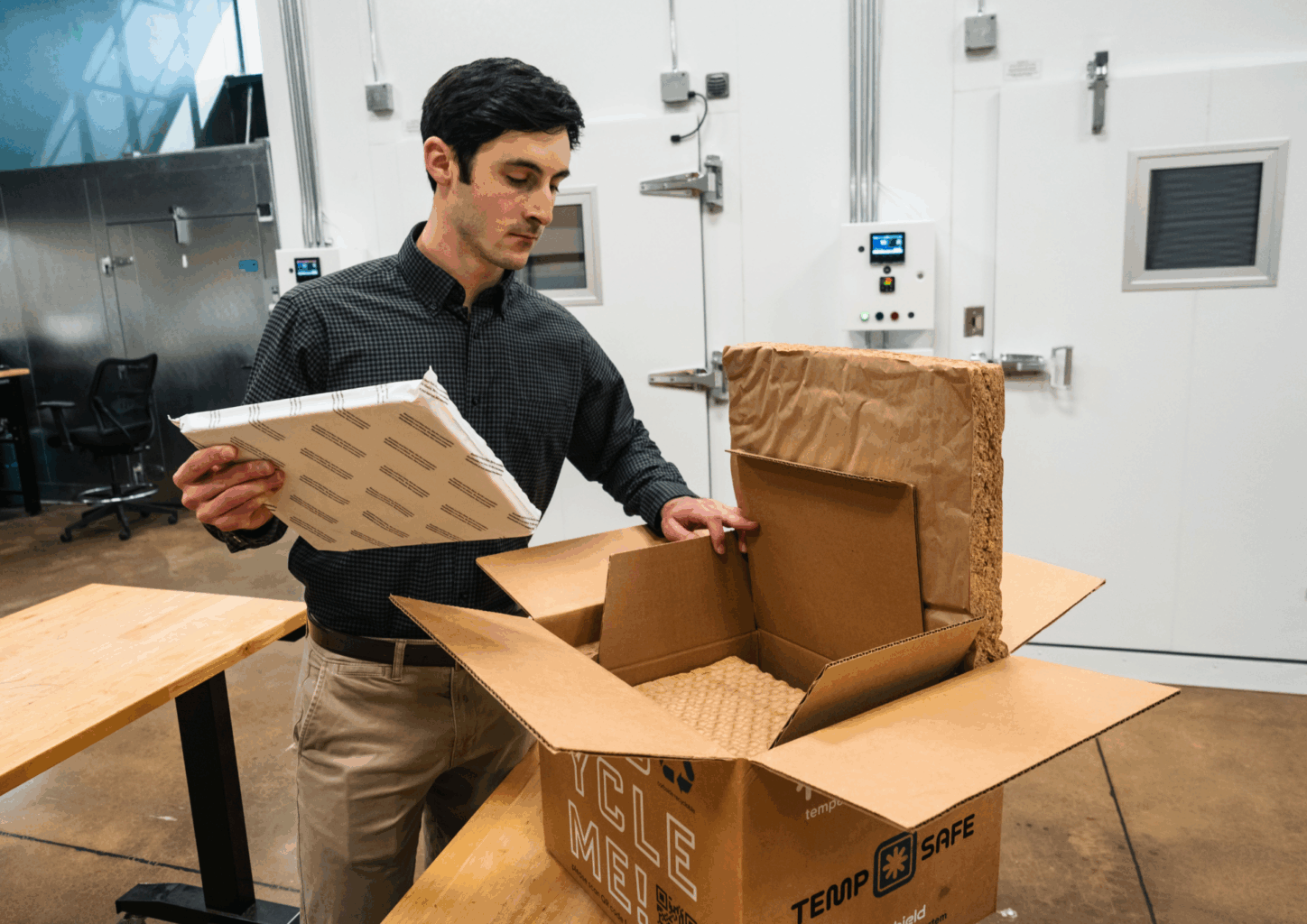
Design Repeatable Pack Outs
Consider:
Payload dimensions and thermal mass
Void space and dunnage
Orientation constraints
Partial vs full payload conditions
A shipper validated at full payload may fail with partial payload changes. Pack-outs must be standardized and trained.
Validate to Seasonal Profiles
Qualification should reflect real distribution conditions:
Summer and winter profiles
Freeze risk testing
Worst-case delay assumptions
Lane-specific qualification frameworks
Standards such as ISTA 7D or 7E may apply depending on product and market requirements.
Validation should simulate real distribution behavior, not idealized lab conditions.
Step 6: Real-World Test and Monitor
Chamber validation is necessary. Field confirmation is critical.
Monitoring must enable action.
Monitoring Models
Indicator monitoring: Sampling and compliance verification
Real-time monitoring: Enables intervention such as reroute or carrier intercept
Without a defined response process, real-time data becomes expensive reporting.
Define:
Alert thresholds
Escalation ownership
Deviation documentation procedures
Chain-of-custody integration
Use a Cold Chain Packaging Scorecard Scorecard
To make the best choice, evaluate packaging options across multiple priorities:
- Performance fit: Ability to maintain product temperature, seasonal qualification coverage, and duration with margin.
- Operational fit: Packout simplicity, conditioning requirements, and scalability across sites.
- Compliance fit: Quality of qualification documentation, SOP readiness, audit defensibility, and chain-of-custody integration.
- Cost fit: Impact on dimensional weight, labor requirements, and the implied cost of excursions, and deviation of handling.
Bottom Line
The right cold chain packaging solution is the one that consistently protects product quality under real shipping conditions. By aligning temperature requirements, shipment format (mailers, parcels, or pallet systems), insulation architecture (paper, EPS, PU, or VIP), refrigerant strategy (gel packs, PCMs, or dry ice), and monitoring response capabilities, organizations can significantly reduce excursions and enhance cold chain reliability.
Standardizing packaging as a qualified system, rather than making per-shipment decisions, reduces deviation rates, operational complexity, and total cost to serve.