As clinical research continues to expand globally and scientific approaches become more advanced, the materials moving through the supply chain are now more sensitive than ever before. Many investigational products, including biologics, advanced therapies, vaccines, and laboratory samples, require strict temperature control. Even brief exposure to temperatures outside their specified range can compromise their stability. As a result, dependable cold chain systems have become fundamental to the design, execution, and monitoring of modern clinical trials.
Cold chain systems are more than just containers and coolants; they are a direct extension of the scientific process. When temperature integrity is not maintained, the underlying research can be jeopardized. Industry estimates report that temperature excursions contribute to $35 billion in annual losses across pharmaceutical supply chains, with as much as 12% of products being recalled due to cold chain failures.
Learn how Veritiv supports Clinical Trials >
Unique Storage and Handling Needs
Modern clinical trials involve materials with highly specific storage and handling requirements:
- Biologics: Typically require refrigeration between 2–8°C.
- Vaccines, enzymes, and serums: Often need frozen storage near -20°C.
- mRNA and viral-vector platforms: Require deep-frozen environments, generally between -65°C and -80°C.
- Cell and gene therapy products: Must be kept at cryogenic temperatures below -150°C.
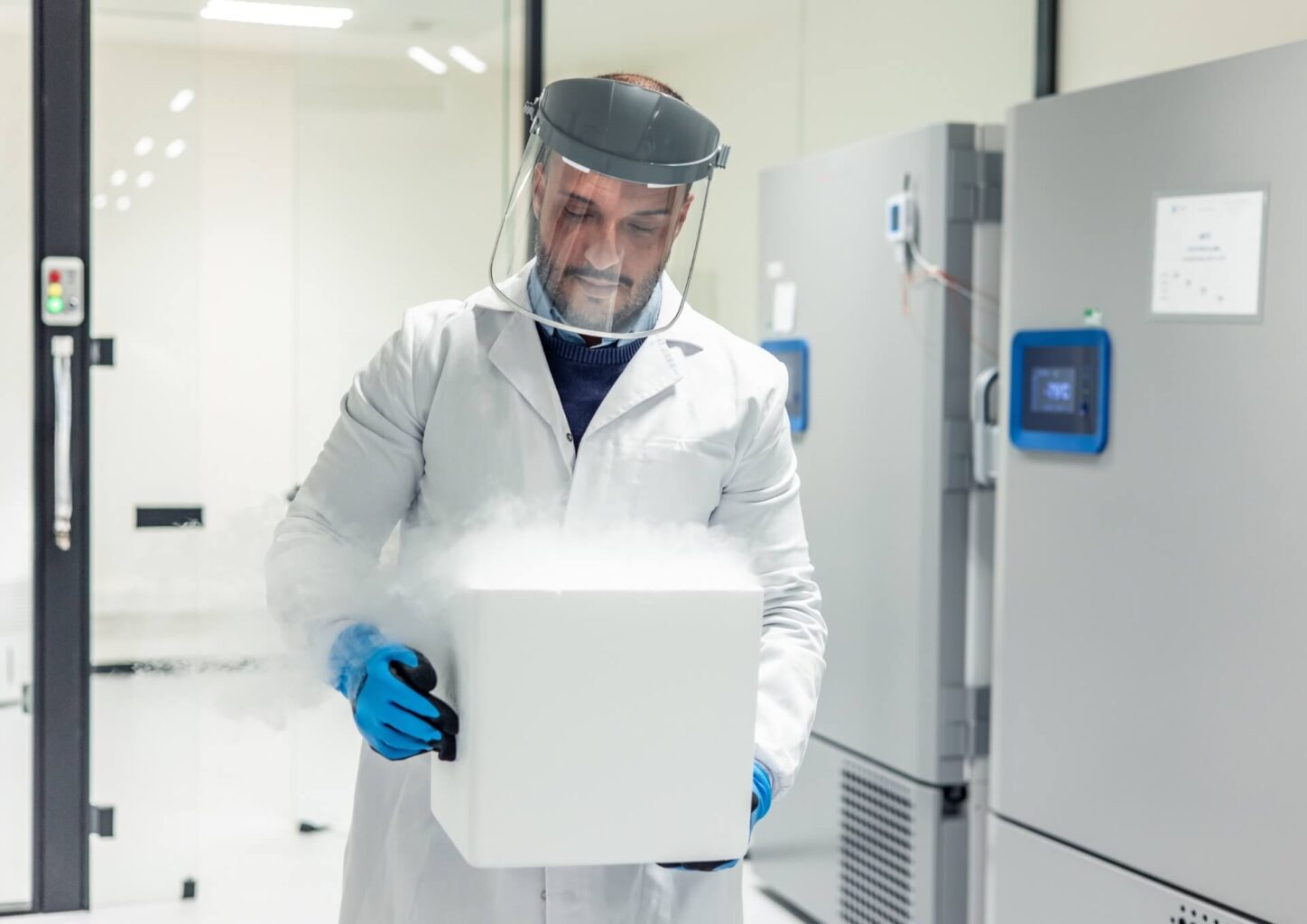
These temperature requirements are not arbitrary; they reflect the inherent biochemical fragility of these materials. Even a micro-deviation of 1-2 degrees can diminish potency or safety and, in some cases, render an entire batch unusable. This is why temperature control is regarded as a scientific discipline rather than simply a logistics step.
Understanding Temperature Ranges in the Cold Chain
Most cold chain requirements fall into established categories:
- Cryogenic (< -150°C): Used for cellular therapies and long-term biobanking.
- Ultra-low (-80°C or below): Common for mRNA vaccines and gene therapies.
- Frozen (-20°C): Needed for certain biologics and reagents.
- Refrigerated (2–8°C): Suitable for vaccines, monoclonal antibodies, and many investigational medicinal products.
- Controlled Room Temperature (15–25°C): Increasingly regulated, with narrower allowable excursions than often assumed.
These categories dictate packaging design, allowed transit times, and monitoring requirements.

A Global Network with Multiple Transfer Points
Clinical trials are rarely confined to a single site. Manufacturing might occur in one location, while packaging or kitting takes place elsewhere, and trial sites are distributed across numerous countries. Often, samples travel in the opposite direction, moving from clinical sites back to central laboratories.
Each transfer exposes materials to unpredictable environments, such as airport tarmacs, diverse climates, customs delays, or the final delivery by couriers. To ensure stability at every stage, a reliable cold chain anticipates such variables. Advanced planning involves validated shipping routes, contingency protocols, and risk assessments tailored to each shipping lane.
Regulatory Expectations and Documentation
Global regulatory frameworks, including GDP, GxP, WHO guidance, and emerging standards for advanced therapies, mandate documented evidence that temperature-sensitive materials remain within their prescribed range from origin to destination. This encompasses:
- Qualification of packaging systems
- Defined conditioning steps
- Risk assessments for shipping lanes
- Complete traceability throughout the journey
Regulators focus on both product stability and the ability to demonstrate control and repeatability. As a result, thorough documentation is as important as maintaining actual temperature integrity.
Technological Advancements, Sustainability, and Usability
Innovation in cold chain management is accelerating. IoT-enabled sensors and blockchain-based tracking systems now provide real-time visibility, allowing for temperature tracking at intervals as short as 15 seconds with 0.1°C accuracy. Reusable systems and eco-friendly materials, such as cellulose-based insulation, are helping to reduce waste and align with environmental, social, and governance (ESG) goals. Simplified packaging solutions and pre-qualified systems are also making operations easier for clinical sites.
These technological and operational shifts reflect a broader trend: cold chain solutions must not only ensure flawless performance but also fit seamlessly into the complex environments of modern clinical trials.
Extended Producer Responsibility Is Driving Industry Change
Extended Producer Responsibility (EPR) fees are reshaping the cold chain industry, driving a shift toward more sustainable packaging materials. Traditional options like EPS and other plastics are facing higher fees compared to cellulose-based solutions, making eco-friendly alternatives more attractive. States such as Colorado, Oregon, and California are leading the charge, with more expected to follow, influencing how businesses select packaging for temperature-sensitive shipments. To get a deeper understanding of these changes and their impact, check out our EPR Masterclass podcast.

The Ultimate Importance of Cold Chain Performance
Temperature excursions have a measurable, documented impact.
Among the leading providers in this space, Veritiv Cold Chain solutions stand out for their comprehensive offerings tailored to the pharmaceutical and clinical research sectors. Veritiv delivers a full suite of temperature-controlled packaging, including pre-qualified shippers, real-time monitoring devices, and consultative support to address complex logistics challenges. Their solutions emphasize not only regulatory compliance and temperature integrity but also operational efficiency, leveraging sustainable materials and reusable designs to minimize environmental impact. By partnering with Veritiv, organizations gain access to proven expertise and robust infrastructure that align with the advancing needs of clinical supply chains.
The effectiveness of the cold chain has a direct impact on trial outcomes. A failed shipment can lead to study delays, increased costs, or, most critically, jeopardize participant safety. Temperature excursions may cause data variability, supply shortages, or even force restarts of trial segments.
When the cold chain functions as intended, it safeguards the scientific validity of the trial, keeps the study on schedule, and ensures every patient receives materials in its intended condition. Clinical operations teams recognize that robust cold chain systems are not a luxury; they are essential infrastructure for conducting successful, modern research.
Explore Veritiv’s ISTA Certified Lab >
Veritiv’s End-to-End Cold Chain Support Model
Veritiv streamlines packaging engineering, validated solutions, ISTA testing, supply chain analysis, and nationwide distribution to ensure temperature stability throughout the study lifecycle. This integrated system maintains product integrity and study reliability.
Evidence supporting the critical role of cold chain management in clinical trials is well documented in scientific literature and regulatory guidance. Numerous studies have shown that temperature excursions during storage or transport can compromise the stability and efficacy of pharmaceuticals and biologics, potentially rendering investigational products ineffective or unsafe. Regulatory agencies, such as the U.S. Food and Drug Administration (FDA) and the European Medicines Agency (EMA), require strict adherence to Good Distribution Practices (GDP) and mandate detailed temperature monitoring and documentation throughout the supply chain to ensure product quality and patient safety.
Furthermore, industry analyses consistently show that cold chain failures result in significant financial losses, product waste, and operational delays – including impacts to clinical trial timelines and patient or participant safety. Multiple reports cite data from the World Health Organization (WHO) and the International Air Transport Association (IATA) estimating 25% of vaccines may degrade by the time they reach their destination due to temperature excursion or improper shipping conditions. This underscores the need for robust, end-to-end temperature controlled systems capable of performing reliably in real-world environments.
Validated cold chain management is essential in clinical trials, as even minor temperature excursions can compromise pharmaceutical and biologic stability, leading to ineffective or unsafe products and regulatory non-compliance. Regulatory agencies like the FDA and EMA require strict temperature monitoring and documentation throughout the supply chain to ensure product quality and patient safety. Failures in cold chain can cause financial losses, trial delays, and increased risks to participants.
Veritiv’s end-to-end cold chain support model addresses these challenges by offering:
- Packaging engineering: Custom-designed, temperature-controlled packaging tailored for specific trial needs.
- Validated solutions: Pre-qualified shippers and real-time monitoring devices to ensure temperature stability.
- ISTA testing: Rigorous performance testing to validate packaging integrity under real-world conditions.
- Supply chain analysis: Expert guidance in logistics planning and risk assessment.
- Nationwide distribution: Coordinated delivery across clinical sites to maintain product integrity throughout the study lifecycle.
These comprehensive services help minimize risk, protect clinical supply integrity, and support successful trial outcomes.
Get your tailored Veritiv solution today >
Partnering to Enhance Your Clinical Cold Chain
Veritiv partners with clinical supply teams to design, validate, and deliver cold chain solutions that support both product integrity and reliable study execution. If you’re interested in exploring how Veritiv’s capabilities can strengthen your program, contact our Cold Chain & Life Sciences team to learn more about tailored solutions for your clinical trials.