In the high-stakes world of cold chain logistics, every inch of space translates to a line item on your freight bill. As shipping carriers continue to adjust their pricing models, understanding and optimizing for Dimensional (DIM) Weight has moved from a “nice-to-have” to a strategic necessity for specialty pharmacies and biopharma manufacturers.
Here is how you can master DIM weight optimization to protect your margins without compromising product integrity.
The Hidden Cost of “Air” in Your Cold Chain
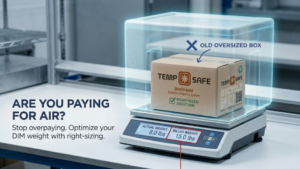
Dimensional weight is a pricing technique used by carriers that factors in the volume of a package rather than just its actual weight. If you are shipping a lightweight, highly insulated box that takes up significant space on a truck or plane, you are likely being charged for that space, not the pounds on the scale.
For many cold chain operations, the traditional “bigger is safer” approach to insulation results in excessive freight spend. When you’re shipping temperature-sensitive therapies, you aren’t just paying for the medication; you’re paying for the air and the insulation surrounding it.
See how much you could be overpaying—run your shipments through Veritiv’s DIM weight calculator to uncover hidden savings opportunities.
In Practice: A Cold Chain Right-Sizing Win
A global biopharma manufacturer shipping high-value, temperature-sensitive therapies (2–8°C) across domestic and international lanes wanted to reduce freight spend without increasing excursion risk. Veritiv’s sales team and Cold Chain Specialist partnered with the customer’s operations and quality groups to resize packouts and standardize two validated systems: one for domestic distribution and one for export. The integrated design combined the shipper, gel packs, and custom spacers to reduce package size and billed weight and deliver consistent performance.
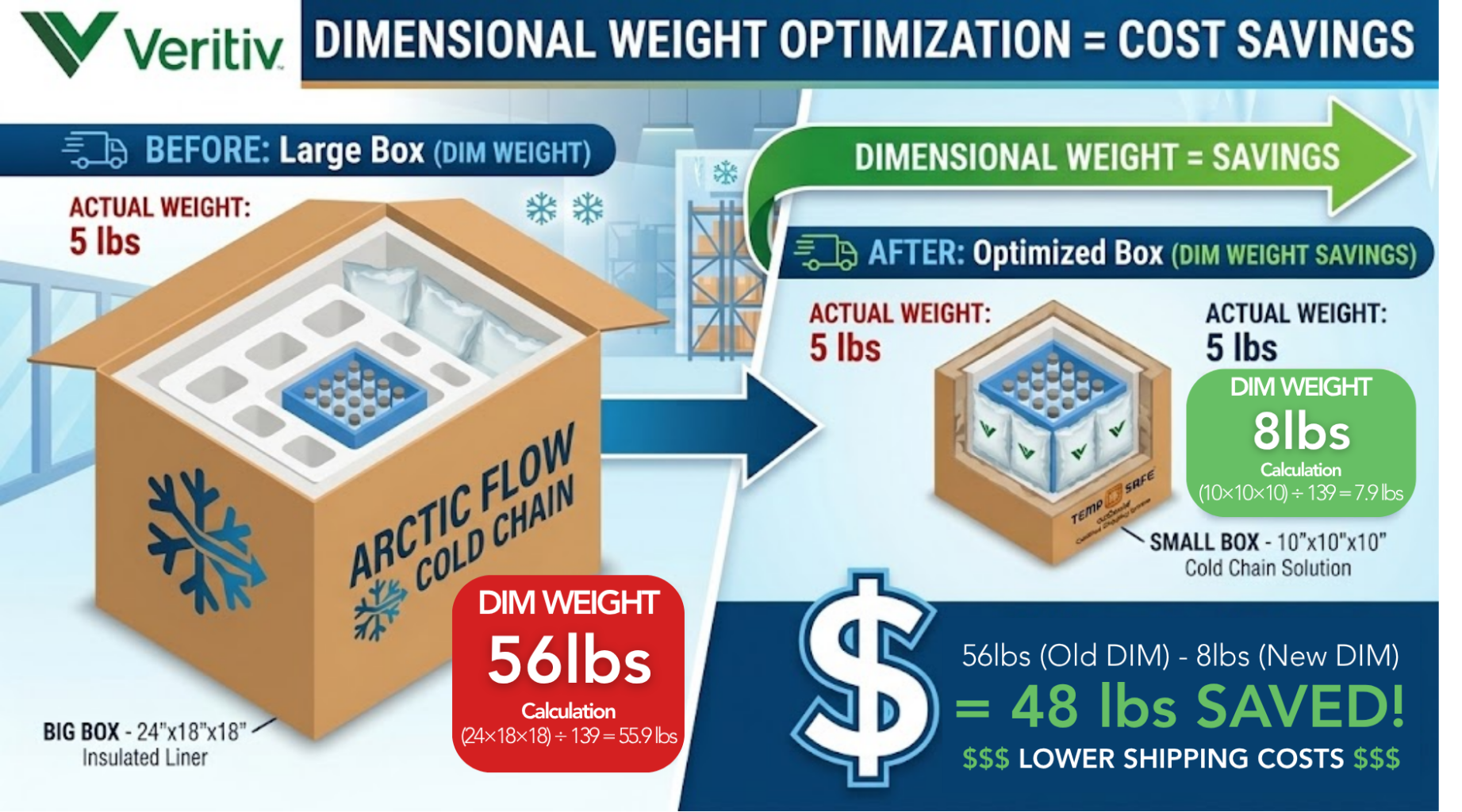
Results included repeatable 48-hour performance at 2–8°C, smaller packing, and the ability to shift select lanes away from overnight service, driving approximately $100,000 in savings. A simple way to sanity-check DIM impact is to run the same formula on two box sizes:
- Box A (24 × 18 × 18 in.): DIM weight = (24×18×18) ÷ 139 = 56 lb
- Box B (10 × 10 × 10 in.): DIM weight = (10×10×10) ÷ 139 = 7.9 lb
That reduction across each dimension reduces billed weight by 48 lbs per shipment, before any rate negotiations.
3 Strategies to Optimize Your DIM Weight
1. Precision-Engineered Insulation
The goal is to maximize thermal resistance (R-value) while minimizing wall thickness. Switching from bulky, traditional materials to high-performance alternatives can significantly reduce the external dimensions of your shipper. Even a one-inch reduction in each dimension can drop a package into a lower DIM weight bracket, leading to thousands of dollars in annual savings.
2. Data-Driven Right-Sizing
Are you using a “one-size-fits-all” shipper for various payload sizes? Right-sizing involves analyzing your most frequent shipment profiles and matching them with a validated container that leaves minimal empty space. Our ISTA-certified labs often find that custom-configured pack-outs allow for smaller external footprints without sacrificing the required 48- or 72-hour thermal duration.
3. Payload-to-Shipper Ratio Optimization
Every cubic inch inside your box should serve a purpose, either as a product or a necessary coolant. By utilizing advanced phase change materials (PCMs) or optimized gel pack placements, you can often achieve the same thermal protection in a more compact configuration, effectively improving your payload-to-shipper ratio and lowering your billed weight.
Beyond the Freight Bill: The Operational Ripple Effect
Optimizing for DIM weight does more than just lower shipping costs. Smaller, more efficient shippers lead to:
- Increased Warehouse Capacity: Smaller boxes mean more units per pallet and more room in your cold storage.
- Streamlined Last-Mile Delivery: Easier handling for couriers and less packaging waste for the end patient.
- Enhanced Performance: A tighter, well-engineered pack-out often provides more consistent thermal stability than a box filled with excess dunnage.
Take Control of Your Shipping Costs
In a landscape of rising costs and complex regulations, your packaging should be an asset, not a liability. If you aren’t sure how much “air” you’re paying for, it’s time to look at the data.
Is DIM weight inflating your logistics budget? Our team of thermal packaging engineers can help you analyze your current shippers and identify immediate opportunities for optimization.
Fill out our contact form to speak with a specialist and start rightsizing your cold chain today.