
Executive Summary (Key Takeaways)
Temperature excursions are often preventable. Most failures come from repeatable gaps in lane assumptions, refrigerant conditioning, pack out consistency, and last mile exposure. Cold chain best practices help packaging and logistics teams lower excursion rates, ensure consistent shipments, and maintain product quality.
Learn more about Veritiv’s cold chain solutions
What Causes Temperature Excursions in Cold Chain Shipping?
A temperature excursion is any deviation outside a product’s labeled storage temperature range during storage, handling, or transportation. For vaccines and other temperature-sensitive products, product labeling and regulatory guidance define acceptable ranges and response expectations. Excursions can occur inside shipping systems, storage equipment, airport ramps, last-mile vehicles, and receiving docks.
Common Excursion Triggers
- Packaging selected without fully accounting for actual shipping lane conditions
- Packout execution variability (conditioning, orientation, air gaps, payload assumptions)
- Handling and dwell time exposures (staging, last mile, receiving delays)
If your team is seeing recurring excursion events, it is often a signal of a control gap, not a need to replace the entire system.
Regulatory Context (GDP and Quality Expectations)
Temperature-controlled products should be shipped under a documented quality system with defensible controls for packaging qualification, monitoring, deviation management, and corrective actions. GDP expectations emphasize risk-based planning, qualified equipment and systems, oversight of outsourced logistics partners, and traceable evidence to support product disposition decisions.
Common Cold Chain Temperature Ranges
Temperature ranges vary by product and label, but common storage bands include:
- Controlled Room Temperature (CRT): commonly 20°C to 25°C (or 15°C to 25°C depending on label)
- Refrigerated (Cold): commonly 2°C to 8°C
- Frozen: commonly -25°C to -10°C (or colder depending on product)
12 Cold Chain Best Practices to Reduce Temperature Excursions
Best Practice 1: Select Packaging Based on Lane Risk, Not Just Temperature Range
What it means: Choose packaging based on the lane’s total duration and exposure risk, not only the required storage range (such as 2 to 8°C).
Why it reduces excursions: Many shippers fail because they are designed for a different reality than the lane actually delivers. A packaging system that works for 48 hours can fail in lanes that regularly push 60 to 72 hours due to hub dwell, weekend holds, or delays.
How to implement it:
- Select packaging using lane duration plus risk, not product temperature alone.
- Use conservative transit time assumptions (including delay scenarios) to set duration requirements.
Revisit packaging selection when carriers, service levels, or routes change.
Best Practice 2: Build Margin into Transit Time Assumptions
What it means: Treat carrier service levels as targets, not guarantees, and plan for variability.
Why it reduces excursions: Many excursion events occur when shipments are delayed inside carrier networks due to hub processing cutoffs, weather disruptions, or failed first delivery attempt. Packaging should be designed around real exposure time, not carrier service commitments alone.
How to implement it:
- Add time margin beyond the carrier commitment.
- Identify high risk windows (weather, peak season, weekends)
- Use lane history to set realistic expectations.
Best Practice 3: Standardize Refrigerant Cooling with a Clear SOP
What it means: Condition gel packs or PCM in a controlled and repeatable way before pack out.
Why it reduces excursions: Conditioning is one of the most controllable drivers of performance. When refrigerants start at the wrong temperature, shipper performance becomes unpredictable and may fail early even if the design is otherwise sound.
How to implement it:
- Write a conditioning SOP with time and temperature requirements.
- Use labeled conditioning areas and status tags to reduce handling errors.
- Include conditioning verification in pack out checks.
Best Practice 4: Confirm Payload Starting Temperature Before Packout
What it means: Ensure product begins the shipment at the correct temperature state.
Why it reduces excursions: Validation and pack out configurations assume the payload starts within a defined temperature range. If payload begins too warm, refrigerant capacity is consumed quickly. If payload begins too cold (especially for CRT), the shipment can drift outside range.
How to implement it:
- Confirm payload temperature at pack out when possible.
- Standardize staging time and storage conditions prior to pack out.
- Train teams that packaging is not a substitute for proper product temperature control.
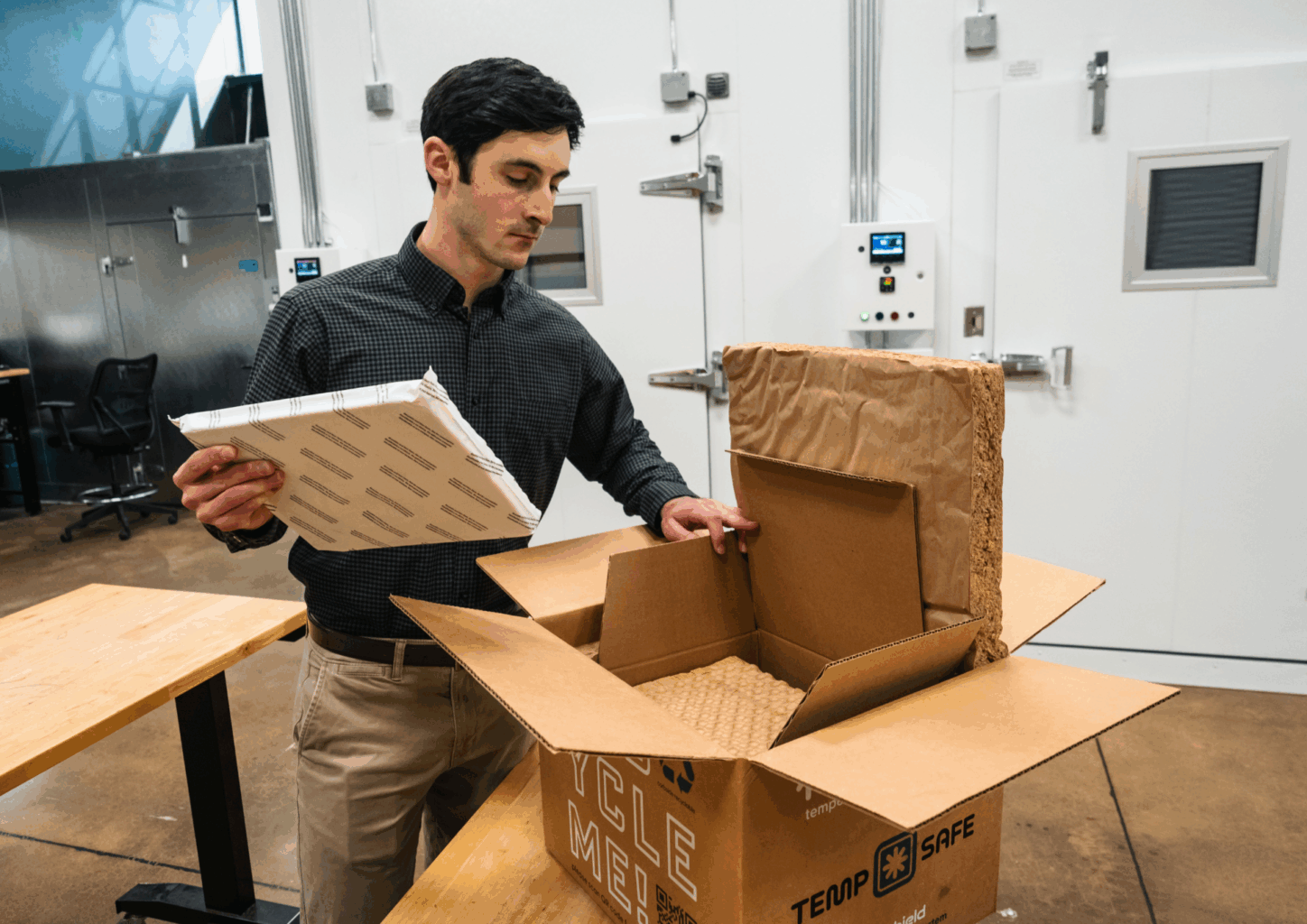
Best Practice 5: Use the Right Packout for the Shipment Size
What it means: Do not use the same pack out for every shipment. Set up standard packoutsfor each shipper type (mailer, parcel, or pallet—based) on payload size or weight, fill level, and starting temperature.
How to implement it:
- Define pack out configurations by shipper format (mailer, parcel, pallet) and payload condition (minimum, typical, maximum)
- Require evaluation when payload weight, fill level, or configuration changes materially.
- Document payload assumptions and allowable configuration ranges in work instructions.
Best Practice 6: Eliminate Excess Air Gaps with Consistent Void Fill
What it means: Reduce empty space and stabilize the internal arrangement of the shipper.
Why it reduces excursions: Air gaps and shifting payloads change heat transfer patterns and reduce repeatability. They can also lead to refrigerant movement that creates hot spots or cold spots.
How to implement it:
- Standardize void fill quantities and placement.
- Use documented pack out diagrams and work instructions, not informal practices.
- Train packers to treat empty space as a performance risk.
Best Practice 7: Use a Defined Refrigerant Placement Layout
What it means: Place refrigerants in consistent locations based on your validated pack out design.
Why it reduces excursions: Refrigerant placement controls temperature distribution. Even small layout changes can cause uneven internal temperatures, including localized freezing or warming.
How to implement it:
- Use visual work instructions and step-by-step procedures.
- Color code refrigerants or shipper components.
- Include a final pack out verification step prior to closure.
Best Practice 8: Add Separation Layers Between Refrigerant and Product
What it means: Ensure refrigerant does not come in direct contact with the payload.
Why it reduces excursions: Direct refrigerant contact can create localized temperature extremes even when average shipper temperature remains acceptable. This can lead to freeze damage or localized overcooling.
How to implement it:
- Use separation layers (corrugated, foam, or buffer materials) as defined in work instructions.
- Train packers on direct contact risks
- Define minimum separation requirements in pack out procedures.
Best Practice 9: Control Staging Time at Pickup and Receiving
What it means: Limit the time shipments spend outside temperature control during internal staging and handoffs.
Why it reduces excursions: Staging time is often longer than expected and can become the largest uncontrolled exposure window. Dock time, pickup delays, and receiving queues can add hours of exposure.
How to implement it:
- Map the full journey, including internal staging steps.
- Define maximum allowable staging time in SOPs.
- Coordinate pickup timing to reduce idle time.
Best Practice 10: Design for Last Mile Conditions, Including Porch Dwell
What it means: Build realistic protection for delivery day exposures after the shipment reaches the destination.
Why it reduces excursions: Doorstep or dock dwell can exceed exposure experienced during transit. Missed delivery attempts and after-hours delivery amplify risk.
How to implement it:
- Use delivery appointment and notification workflows when possible.
- Ensure packaging assumptions include last mile exposure time.
- Train receiving teams on rapid intake procedures.
Best Practice 11: Verify That Validation Evidence Matches Your Use Case
What it means: Confirm the packaging validation report aligns with your lane, payload, duration, and configuration.
Why it reduces excursions: Validation evidence is condition specific. It may not reflect your actual shipping lane conditions, pack out configuration, seasonality, or payload size.
How to implement it:
- Review validation inputs (duration, profiles, payload, pack out configuration)
- Confirm seasonal and conservative assumptions align to your shipments.
- Require documentation alignment before adoption.
Best Practice 12: Align Monitoring to Shipment Risk and Define a Response Process
What it means: Treat monitoring as part of your cold chain control system. Use indicators or data loggers based on shipment risk and ensure each excursion outcome drives action.
Why it reduces excursions: Monitoring does not prevent excursions by itself. It prevents repeat excursions. When teams consistently review temperature data, investigate deviations, and update pack out procedures, they reduce recurrence and improve shipment repeatability. Without a response process, monitoring becomes documentation only and excursion rates do not improve.
How to implement it:
- Define monitoring requirements (indicator vs logger) based on shipment risk.
- Assign ownership and review timelines for every monitored shipment.
- Implement an excursion response SOP with clear CAPA triggers.
Frequently Asked Questions (FAQ)
What is a temperature excursion in cold chain shipping?
A temperature excursion is any event where a shipment’s temperature goes outside the allowed product range (for example 2 to 8°C or 15 to 25°C). Excursions can happen during pack out, staging, transit, or receiving. Even short out of range periods may trigger product review, quarantine, or disposal depending on the product and quality requirements.
What causes most temperature excursions?
Most excursions are caused by preventable process and handling issues. Common causes include incorrect refrigerant conditioning, packing product at the wrong starting temperature, leaving excessive empty space in the shipper, underestimating staging or last mile dwell time, and using packaging that does not match the lane duration and risk.
What is the most effective way to reduce cold chain shipping failures?
The most effective approach is improving repeatability through standardized conditioning, documented pack out work instructions, and clear handling controls. Programs that reduce variability see fewer excursions even when using the same core packaging materials.
How can I reduce temperature excursions without changing packaging systems?
Many programs reduce deviations by tightening procedures rather than changing packaging. Standardize conditioning, minimize staging, confirm payload starting temperature, reduce air gaps, and verify validation evidence aligns with your lane and payload.
Do I need data loggers for every cold chain shipment?
Not always. Data loggers add value when shipments are high risk, high value, new to a lane, or frequently delayed. For stable lanes with strong packaging performance, temperature indicators or periodic logger sampling may be sufficient. The best approach is to align monitoring to shipment risk and have a defined response process.
What is the difference between a temperature indicator and a data logger?
A temperature indicator typically shows whether a shipment exceeded a threshold temperature, but it does not provide a full-time based record. A data logger records temperature over time at set intervals, allowing teams to see when exposure occurred, how long it lasted, and whether it was trending or sudden.
When should cold chain packaging be requalified?
Requalification is recommended whenever key shipping conditions change. Examples include changing carriers, switching service levels, adding new shipping lanes, increasing expected transit time, changing pack out configuration, modifying payload size, or entering a new season with significantly different temperature exposure risk.
How long should passive cold chain packaging hold temperature?
It depends on the shipper design, insulation type, refrigerant strategy, payload size, and lane profile. Many passive systems are designed for 24, 48, or 72 hours. However, packaging duration should reflect real world exposure including delays, staging, and last mile dwell time rather than only carrier transit time.
How Can You Reduce Temperature Excursion Risk Across Your Program?
Cold chain performance increases with repeatable processes. Use packaging suited to lane risk, ensure consistent pack out, make realistic dwell time assumptions, manage last mile handling, and provide documentation specific to your use case.
Most programs do not need a full redesign. They need better controls in the places where failures occur most often.
Need Help Reducing Excursions?
If your team is seeing recurring temperature excursions, a structured pack out and lane review can usually identify the cause quickly. If you would like a second opinion on packaging selection, conditioning SOPs, or lane assumptions, our cold chain specialists can help you tighten performance and reduce deviation frequency. Get Started