Demand for GLP-1 medications and other peptide therapies is changing how specialty pharmaceuticals move through the supply chain. As direct-to-patient and specialty pharmacy fulfillment grows, operations teams are handling more temperature-sensitive shipments, often with relatively small payloads.
That creates a practical challenge: how do you maintain the required temperature, keep packout simple and reduce unnecessary packaging?
The answer starts with designing the cold chain around the medication, shipment profile and fulfillment operation.
1. Start With the Product Requirements
Before selecting packaging, understand the specific storage and transportation requirements of the medication being shipped.
Many GLP-1 and peptide therapies require refrigerated storage, commonly within a 2°C to 8°C range. However, requirements vary by product, so the packaging system should always be selected and qualified based on the specific medication and distribution profile.
Operations teams should consider:
- Required temperature range
- Expected transit time
- Potential delays
- Seasonal temperature conditions
- Payload size and configuration
- Delivery method and destination
For direct-to-patient shipments, the last mile deserves particular attention. Packages may encounter hot delivery vehicles, cold temperatures, extended time on a doorstep or unexpected transit delays.
Understanding these variables first makes it easier to choose a packaging system that provides the necessary protection without adding unnecessary materials or complexity.
2. Right-Size Packaging for the Payload
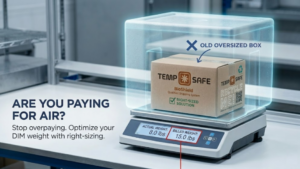
Traditional cold chain packaging can be significantly larger than the medication being shipped. A small pharmaceutical payload may be surrounded by a large insulated shipper, multiple gel packs and additional packaging components.
At higher shipping volumes, that extra material can create operational challenges.
Oversized packaging requires more warehouse space, increases the number of components employees need to manage and can result in more packaging for the patient to dispose of.
A better approach is to match the packaging system to the payload.
For small-format pharmaceutical shipments, compact systems can reduce the amount of packaging required while simplifying storage and packout.
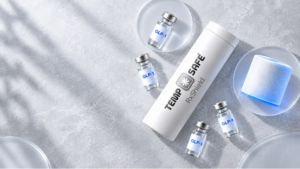
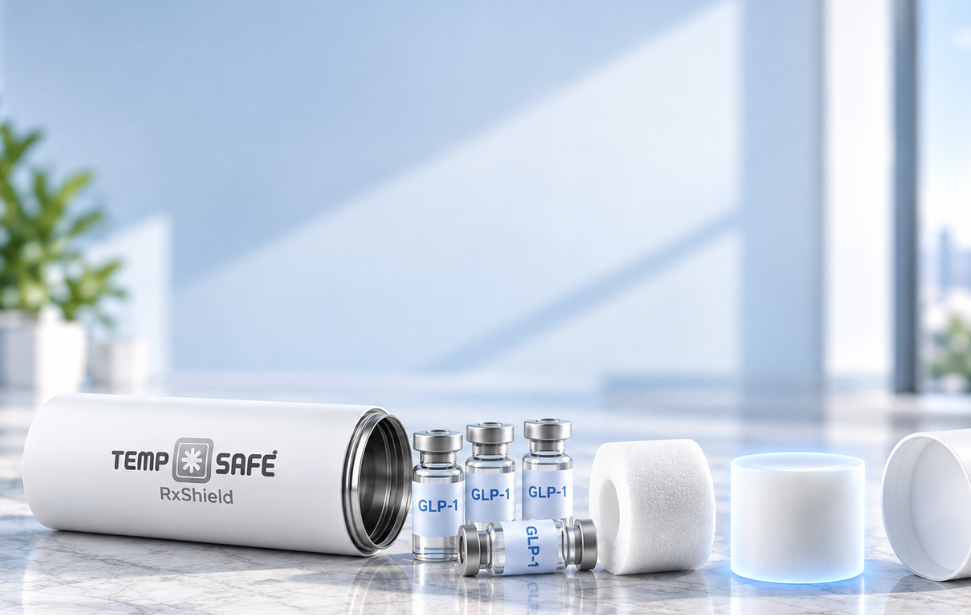
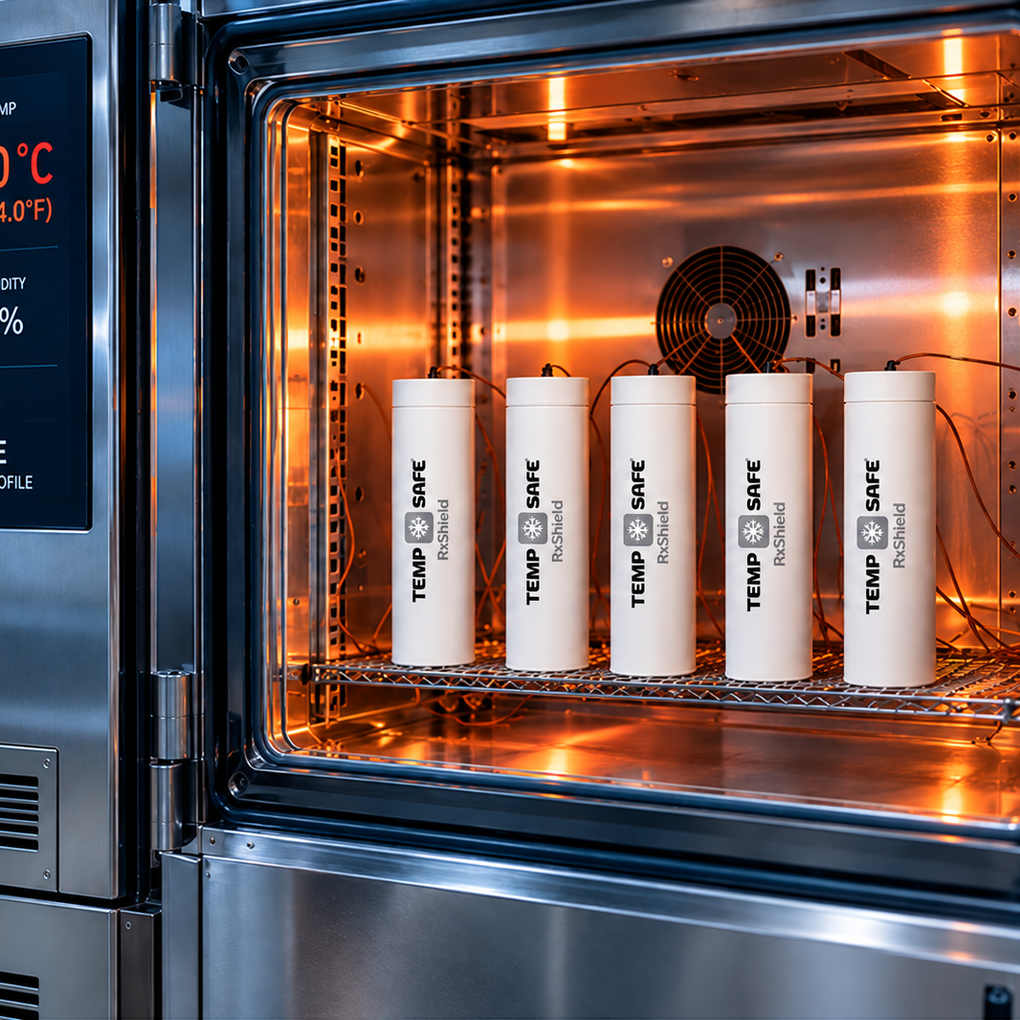
TempSafe® RxShield™, for example, uses a compact canister format designed for small pharmaceutical payloads, including configurations of up to four 10 mL vials.
3. Use Qualified Thermal Packaging
Temperature-sensitive pharmaceuticals should be shipped in packaging that has been tested for the conditions it is expected to encounter.
ISTA 7E provides standardized thermal profiles that can be used to evaluate insulated shipping systems for parcel distribution environments. Testing against recognized standards helps organizations understand how a packaging system performs under defined temperature conditions.
When evaluating a solution, look for clearly documented information on:
- Qualified temperature range
- Duration of thermal performance
- Testing protocol
- Payload configuration
- Coolant or phase change material requirements
- Packout instructions
- TempSafe® RxShield™ is qualified to ISTA 7E and designed to maintain a 2°C to 8°C temperature range for 36+ hours using a standardized PCM configuration.
This gives fulfillment teams a defined packaging system and packout rather than requiring employees to determine coolant quantities or configurations for each shipment.
4. Make Packout Easy to Repeat
Thermal performance is only one part of an effective cold chain program. The packaging also needs to work in the fulfillment environment.
Complex packouts with multiple components and detailed assembly steps can slow production and create more opportunities for inconsistency.
For higher-volume operations, look for packaging that:
- Uses a consistent packout
- Requires fewer components
- Is easy to train employees on
- Stores efficiently
- Protects the payload during handling
- Can be incorporated into existing fulfillment workflows
Standardization is especially important as shipment volumes increase. A packaging system that is easy to understand and repeat can help teams maintain consistency across shifts, facilities and employees.
Compact packaging can also reduce the amount of warehouse and staging space dedicated to cold chain materials.
5. Consider the Patient Experience
For direct-to-patient shipments, packaging becomes part of the patient experience.
A patient receiving a small medication shipment should not have to manage an unnecessarily large box filled with insulation, coolant and other materials.
Right-sized packaging can create a cleaner, simpler delivery experience while also reducing the volume of material entering the waste stream.
Organizations should consider how easily patients can:
- Open the package
- Identify and remove their medication
- Understand any included instructions
- Handle or dispose of the packaging after use
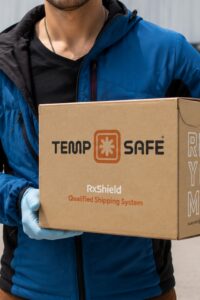
Branding may also be important for specialty pharmacies and pharmaceutical organizations that want a consistent experience from fulfillment through delivery. TempSafe® RxShield™ can be customized for programs where branded packaging is needed.
Building a More Efficient GLP-1 Cold Chain
As GLP-1 and peptide shipment volumes grow, packaging decisions can have a significant impact on both product protection and fulfillment operations.
The most effective approach is not simply adding more insulation or coolant. It is selecting a packaging system based on the actual product, payload, transit conditions and operational requirements.
For organizations evaluating their current GLP-1 shipping program, four questions are a useful place to start:
- Is our packaging qualified for the conditions our shipments encounter?
- Are we using more packaging than the payload requires?
- Can our teams pack every shipment consistently and efficiently?
- Does the packaging make sense for the patient receiving it?
If the answer to any of these questions is no, it may be time to reevaluate the current packout.
TempSafe® RxShield™ was developed specifically for small-format, temperature-sensitive pharmaceutical shipments, combining a compact footprint with ISTA 7E-qualified 2°C to 8°C performance for 36+ hours.
Learn more about TempSafe® RxShield™ or request a sample to evaluate the system for your cold chain operation.